10 ideas to increase your average basket size in 2025

This blog post was written in collaboration with the French based SEO agency YATEO Go check them out!
One of the growth levers for revenue is increasing the average basket value. This key indicator of your business's health should be closely monitored. So what strategy should you implement to increase your average basket? First, lets get a clear definition of what average basket size is.
What is the Average Basket?
The average basket is an indicator that shows how much each customer spends on average in your online store.
It can be calculated on a per-customer basis, but it is more insightful to know the value of this commercial metric for all customers combined, based on your overall revenue.
The global average basket value is calculated using the following formula:
Monthly or yearly revenue ÷ Number of orders in the month or year
You should evaluate your current average basket value and then set a target to achieve for the upcoming year.
Why You Should Monitor Your Online Store's Average Basket
Calculating the average basket value is beneficial on multiple levels when aiming to grow your e-commerce business.
This marketing indicator allows you to:
- Assess the profitability of your business.
- Evaluate your business's growth potential.
- Identify the most profitable sales channels (physical or digital).
- Recognise periods of low or high activity.
- Correlate the average basket with the characteristics of your target audience.
- Position yourself relative to competitors.
Increasing Your Online Store's Average Basket: 10 Methods
Below are a range of techniques that can help you increase in the average basket value. Each method has its own advantages. Depending on your business and target audience, some methods will be more suitable and effective than others. Lets go!
1. Cross-Selling and Upselling: Offer Complementary Products
Do you know about cross-selling or cross-promotions? When a customer is about to finalize their order or simply browsing a product page, you can suggest one or more additional products.
These could be complementary items related to the product added to their cart or featured on the product page. For example, offer a sleeping bag to someone interested in camping tents, or a night cream to someone viewing day cream products.
Cross-selling involves collecting and processing data related to the customer's purchase history to suggest complementary products aligned with their preferences.
For upselling, you have two options:
- Use the customer's visit to promote products that are harder for you to sell. In this case, suggestions are based on your business priorities rather than customer preferences.
- Recommend popular products among other customers, leveraging social proof through recommendations.
2. Upselling: Suggest Higher-End Products
As its name suggests, upselling is a marketing strategy aimed at offering customers a product similar to what they are considering but from a higher-end range. The new product is more advanced, stylish, or of better quality—and therefore more expensive.
3. Discounts for Minimum Purchase Amounts
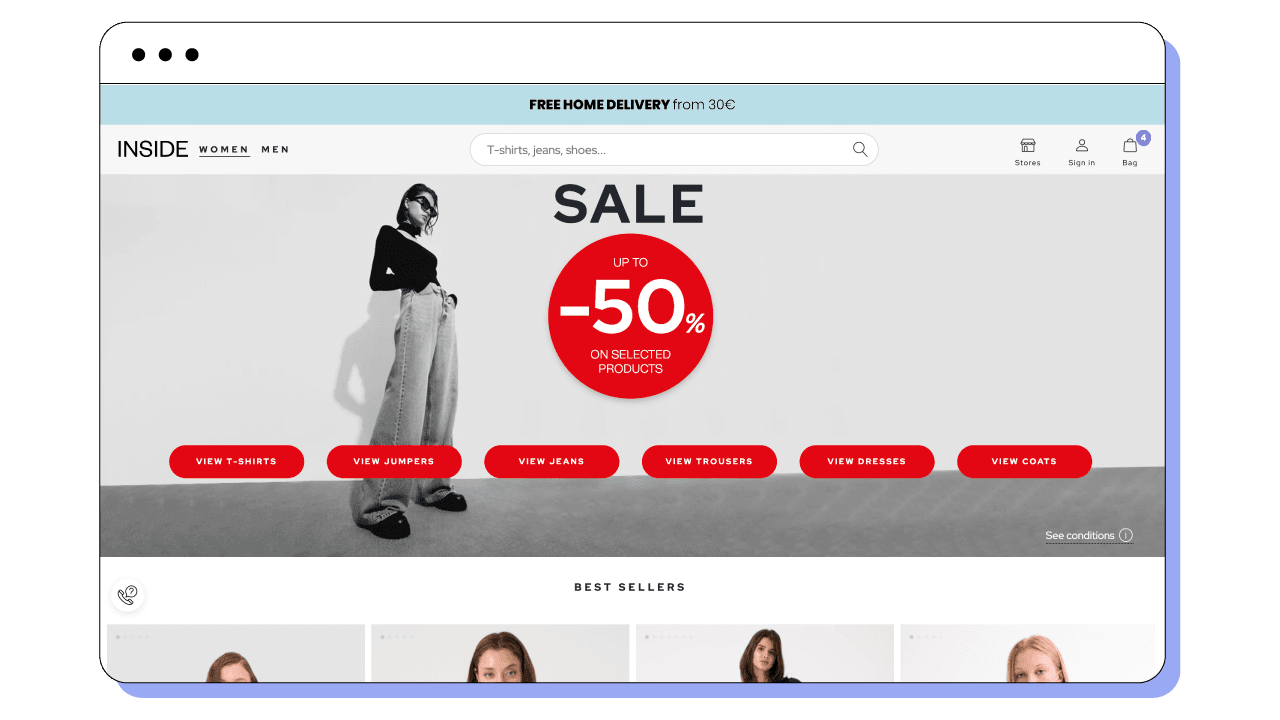
Customers are often willing to spend more if they feel they are getting a deal. Here are two examples of effective incentives:
- Free shipping for orders above a certain amount.
- A free gift or discount coupon for orders exceeding a minimum amount.
Highlight these discounts and offers prominently on your e-commerce site's homepage so they catch customers' attention immediately.
4. Loyalty Programs
The primary goal of a loyalty program is to encourage customers to return regularly to shop at your online store.
Loyalty programs can also encourage customers to spend more per order, depending on how they are structured. For instance, you can offer points accumulation starting from a defined order amount and create tiers with increasing point thresholds.
Once customers accumulate enough points, they can receive a voucher or other rewards.
5. Creating Bundles or Kits
Purchasing a product often addresses a specific need. To sell effectively, it's important to stimulate that need.
If certain products complement each other and are frequently purchased together, consider offering them as kits.
For consumable products, offering bundles of two, three, or more identical items can also appeal to customers by providing bulk discounts.
Whether it’s a bundle or kit, customers end up buying more than they initially planned while perceiving it as a good deal since each item in the bundle costs less than if purchased individually. For merchants, this small discount encourages higher sales volumes and increases the average basket value.
6. Using Live Chat
In physical stores, merchants can easily identify hesitant customers and guide them toward making purchases—or even convince them to buy multiple items. Online, this direct interaction isn’t possible by default.
With live chat functionality, however, a chat window can appear when customers enter your online store or after a set period. This allows you to answer their questions and guide them toward making purchases.
Live chat is not just an anti-cart-abandonment tool; it’s also an effective lever for increasing average basket values.
7. Increasing Prices
If you want to raise the average basket value, one of the most effective solutions is increasing product prices!
Of course, it’s crucial not to apply this change across all products in your online store and remain reasonable.
Adding just a few cents won’t deter most customers but can significantly impact your revenue over time.
For larger price increases—such as moving into higher-end markets—your service offerings and product quality must align with these changes. Focus on improving customer support throughout their purchase journey while enhancing payment options, shipping conditions, and return policies.
8. Enhanced Customer Experience
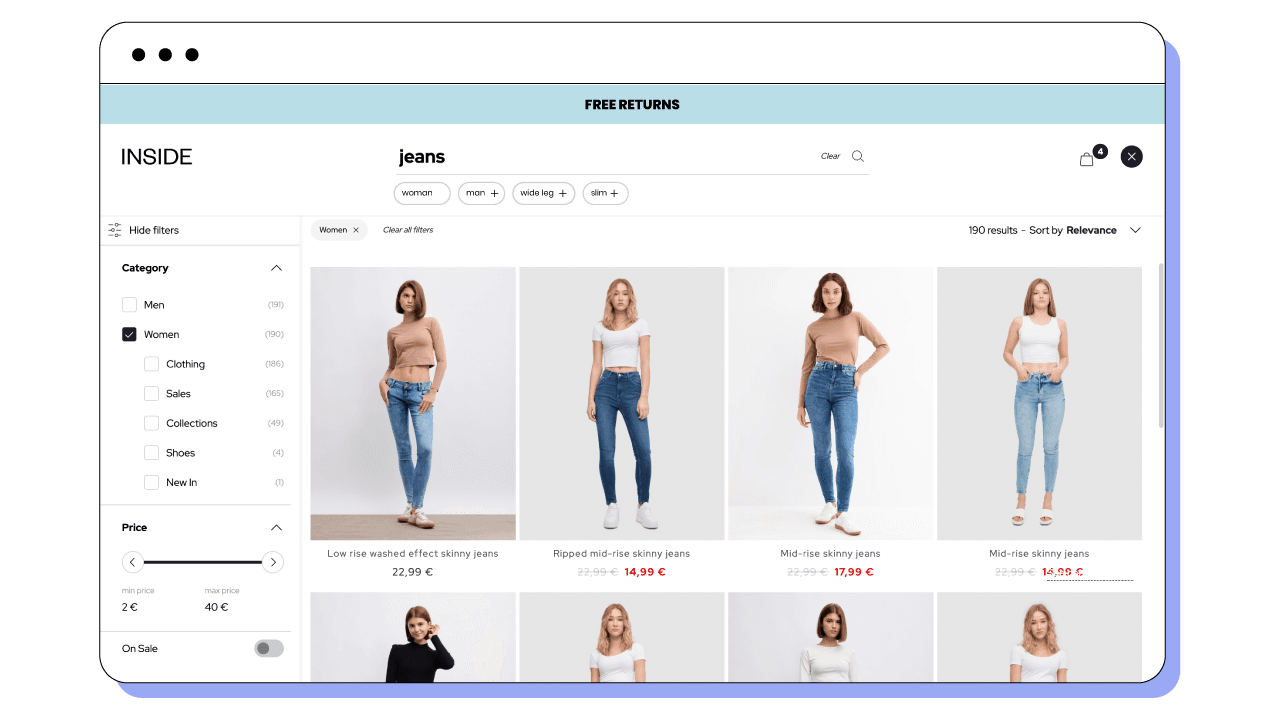
Customer experience encompasses everything that happens during their purchase journey. How can you achieve this? There are many solutions across various stages:
- Personalizing their shopping experience.
- Improving website design.
- Streamlining navigation with plugins that enhance search functionality.
- Creating targeted and relevant content.
- Ensuring team availability via phone, email, or chat support.
9. Promotions
This solution aligns with discounts (method #3) but applies more broadly since no minimum cart value is required for eligibility.
If you have excess stock that needs quick turnover, offer those items at reduced prices—but note that selling below cost is prohibited outside regulated sale periods.
10. Down-Selling
Contrary to upselling (method #2), down-selling involves offering prospects cheaper alternatives than what they were initially considering purchasing.
The goal here is preventing cart abandonment while still increasing overall sales volume—even if only slightly. After all, earning €4 from a down-sell beats earning nothing from an abandoned cart!
Your Next Steps
Now you know how to increase your online store's average basket value! However, keep in mind that you should always prioritise customer satisfaction when implementing these methods. Experiment with different techniques and identify which ones work best for various customer profiles—but remember to keep varying strategies over time. Good luck!